From Code to Customer Benefit: Insights Into the Sales Department for Software-Defined Systems
In today’s world, software is the driver of innovation – not only in vehicles, but in many electrical devices too. Plamedi, a sales expert at Vector, provides an insight into his work and the challenges he faces in field of the software-defined vehicles (SDV) and software-defined systems (SDS). His motivation is renewed each day by the teamwork, open communication, and the development and implementation of innovative solutions in partnership with customers.
Plamedi studied Industrial Management and began working at Vector in 2023 while still a student. He has been permanently employed as a sales expert for embedded software since 2024. Plamedi acts as a central interface between customers and technical departments to ensure that the right embedded software solution is found for every project. He spoke about his sales work at Vector at an insight session at the Embedded Barbecue 2025 in Chemnitz.
Finding Innovative Solutions in Partnership With Customers
As a sales expert at Vector, Plamedi’s day-to-day is filled with exciting challenges. “Technology is developing rapidly. It’s essential that you keep yourself informed of the latest developments,” he emphasizes. However, he sees this challenge as one of the most exciting aspects of his work. “It’s incredibly satisfying when we can work with our customers to find innovative solutions and then implement them successfully”.
Working closely as part of a team is another important feature of his work. “At Vector, teamwork and open communication is really important to us,” says Plamedi. “Everyone brings their own individual strengths to the table, and together we achieve our goals.” This positive corporate culture is a major factor in the company's success and creates a motivating working environment.

Working Together as Equals – Teamwork in the Sales Department
We consider ourselves to be a partner who not only delivers individual software solutions, but also provides a holistic ecosystem. This includes modular software platforms, flexible tooling solutions, as well as comprehensive service and support processes. Our sales teams are the interface between customer requirements and Vector's innovative strength. They take note of requests and challenges, coordinate the development of specific solutions, and ensure that our customers benefit from the latest technologies and best practices. Our sales division is divided into four focus groups. These groups work together to ensure that customer requirements are considered and implemented in the best possible way.
- Sales experts are the first technical contact person for our customers. They note the requirements, evaluate them internally with the solution and product managers, and develop customized solutions in order to successfully implement software projects.
- Account managers focus on customer acquisition and development. They track offers and manage commercial activities between Vector and the customer.
- Sales managers are responsible for administrative tasks: from preparing offers, providing price indications, and confirming orders to organizing deliveries and handling service requests.
- Business developers take charge of technical discussions with customers, particularly at conferences, trade shows, and events. They generate leads and drive new business opportunities in the embedded software field.
We also work closely with the product management team, who are in direct contact with car manufacturers and take note of their specifications. In post-sales, our colleagues help with bug fixing, services, and integration courses. This ensures optimum integration of our solutions in our customers' systems. Our developers ensure that the software is actually installed at the customer's site and used in the vehicle. The tooling team provides the tools required to read, calibrate, and validate embedded software. Lastly, the Supporting Process and Policies team brings together all cross-functional processes, documents them, and ensures that projects are carried out in a structured and successful manner – so that all stakeholders are satisfied with the outcome.
Challenges in the Field of Software-Defined Vehicles
As present, software is mainly found in infotainment systems and is easy to use. Features such as music, navigation, and apps are easy to update and synchronize. However, integration in vehicle-related or safety-related features such as indicators or driver assistance systems is still very limited. New features would generally still require complex hardware modifications.
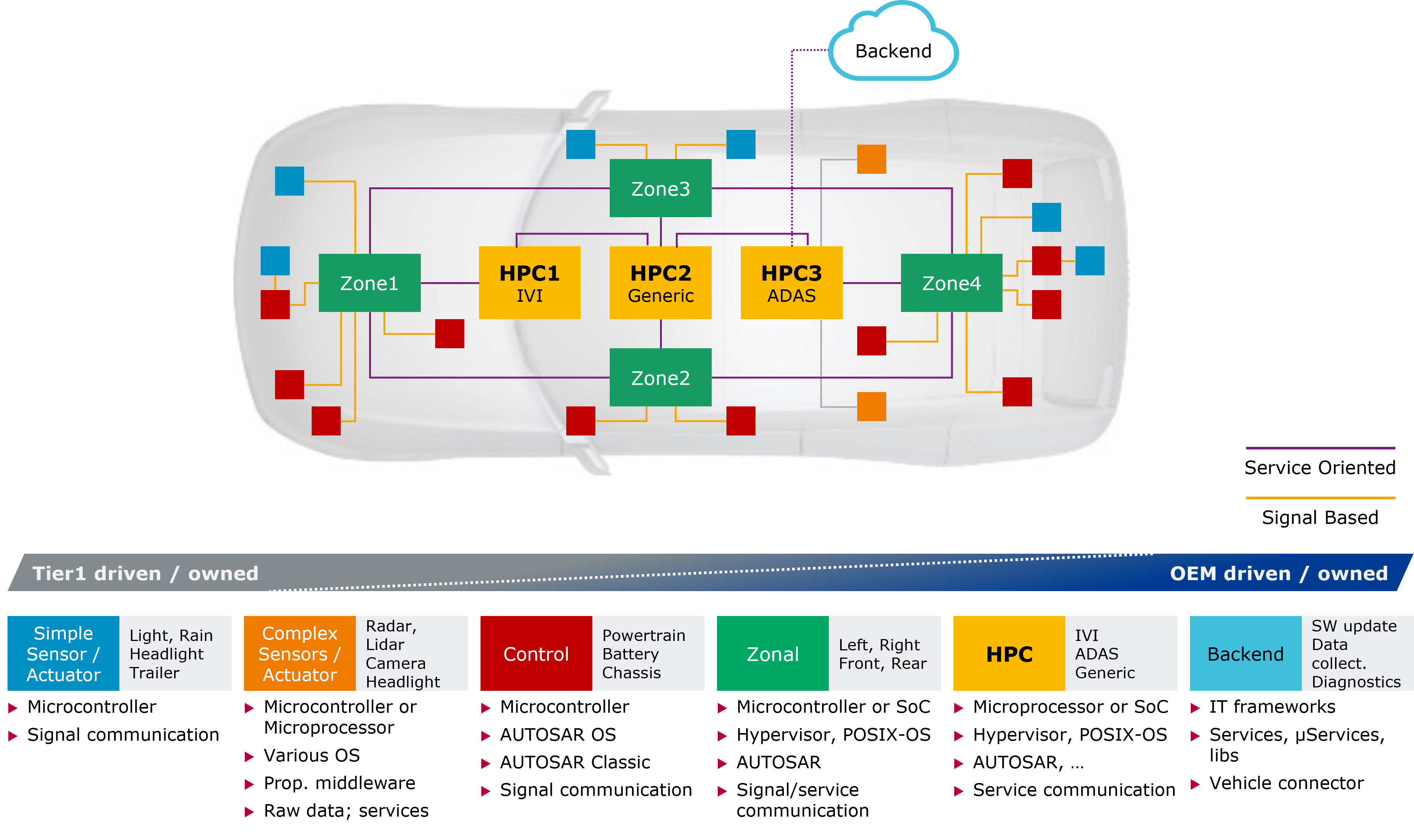
Technical complexity is increasing at the same time: up to 120 control units per vehicle create hard-to-maintain cable systems, high weight, and rising costs. Zone architectures with centralized high-performance computers (HPCs) are designed to reduce precisely this, but are not yet established in all areas.
The shift towards software-defined vehicles (SDVs) relies on modular, flexible software platforms that allow features to be provided independently of the hardware and be activated or updated via over-the-air updates. The industry is therefore in the midst of a paradigm shift: it’s moving away from a focus on hardware and towards software-driven vehicle development.
Modern vehicles have a multitude of control units. This creates complex cable systems, high weight, and difficult maintenance conditions. Zone architecture with centralized high-performance computers (HPCs) is designed to reduce this complexity, but has not yet been implemented in all areas. Flexible and adaptable modular software platforms are needed in order for different control units and zones to work together efficiently. It should be possible to activate and adapt features independently of the hardware, e.g. via over-the-air updates.
Vector in Non-Automotive Industries
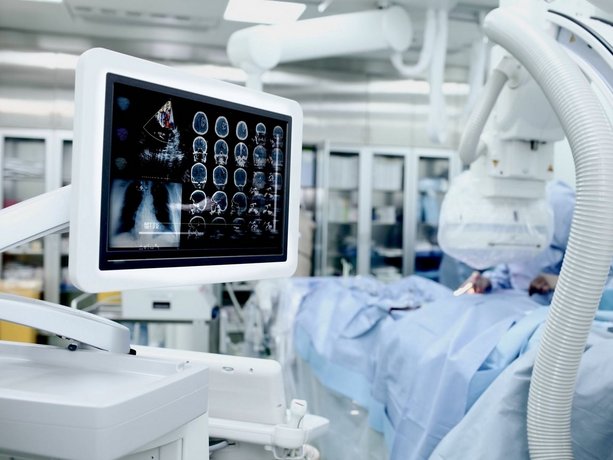
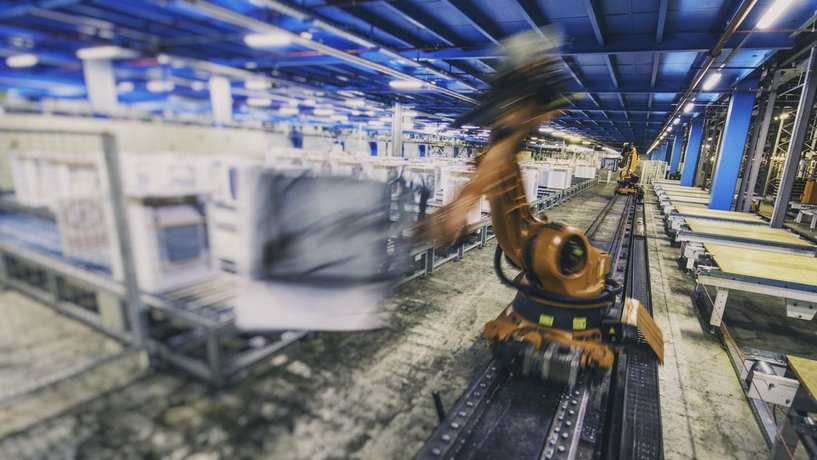
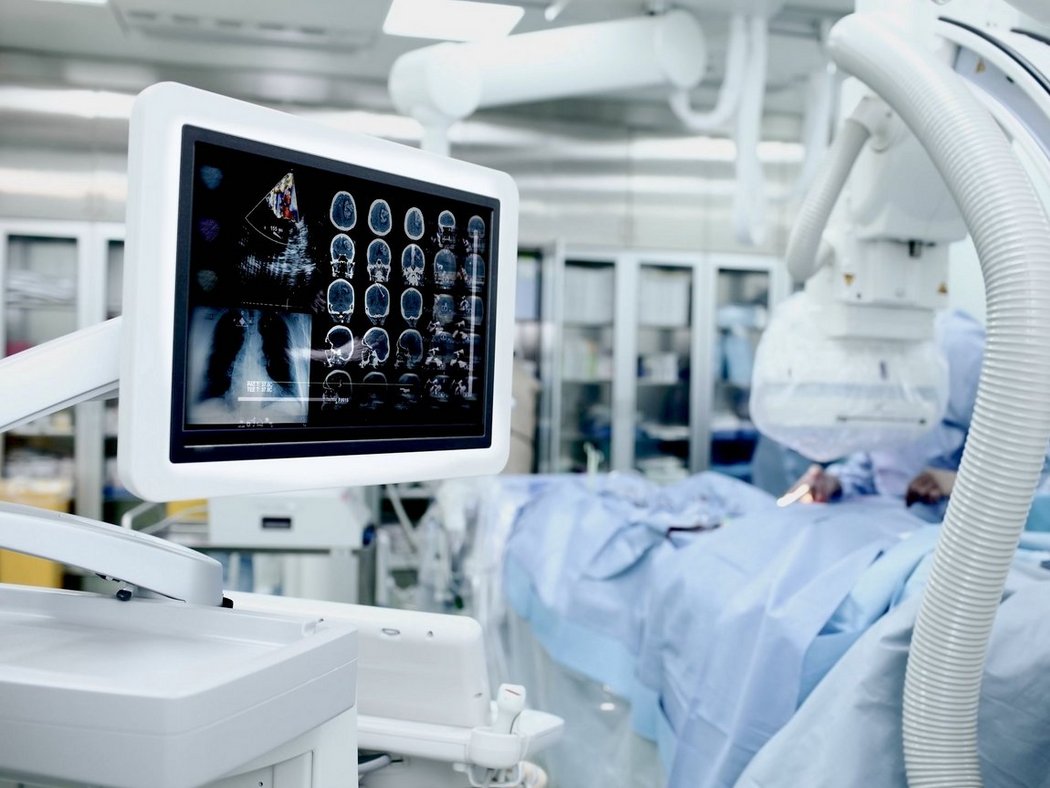
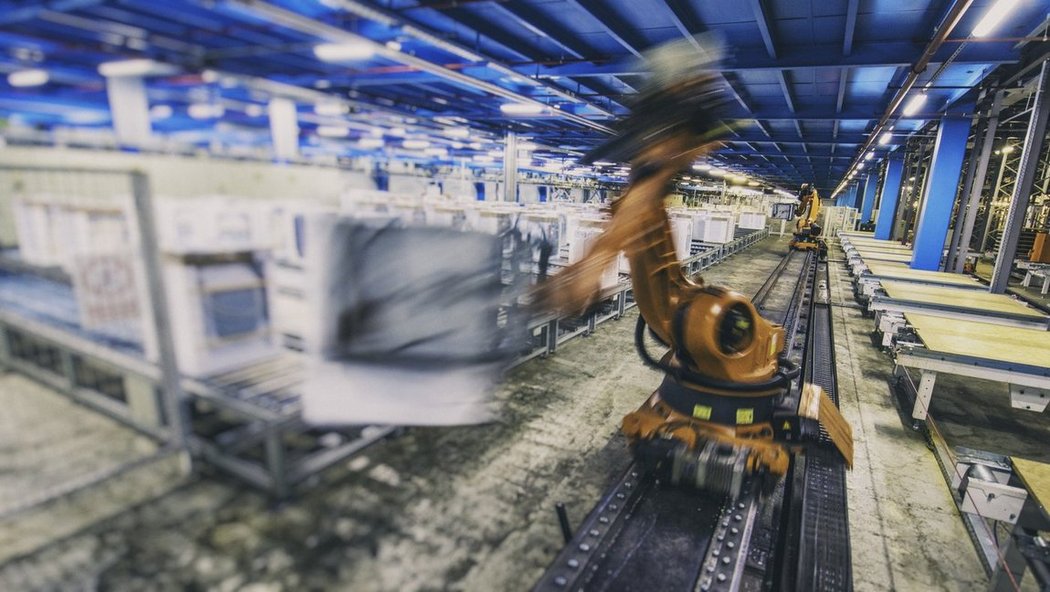
The challenges affect not only the automotive industry, but also areas such as medical technology, smart homes, and intralogistics. Complexity is increasing in these areas too, as is the need for secure, updatable, and networked software solutions. Intelligent systems are becoming ever more important – systems that enable over-the-air updates and provide reliable and efficient support for complex applications.


We Develop Software That Drives Innovation
Vector plays a key role in the development of software-defined systems and supports its customers in various industries with innovative solutions and a scalable software platform. Our corporate culture makes us an attractive employer for all those seeking to contribute and implement their ideas in an innovative and dynamic environment.